

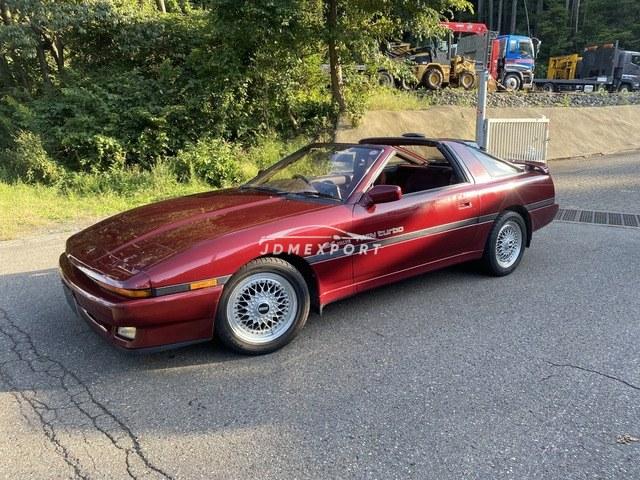
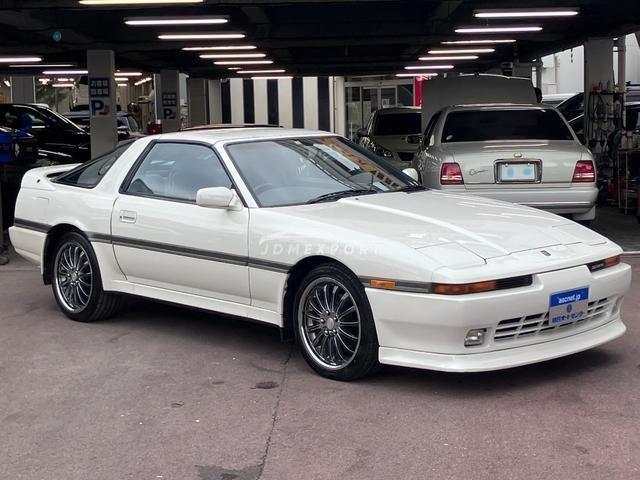
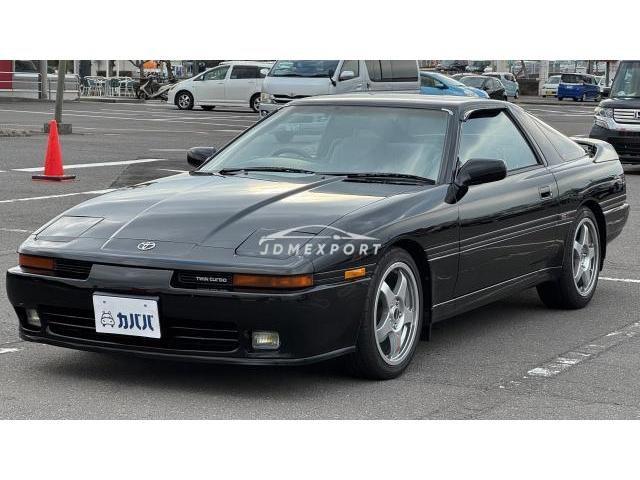
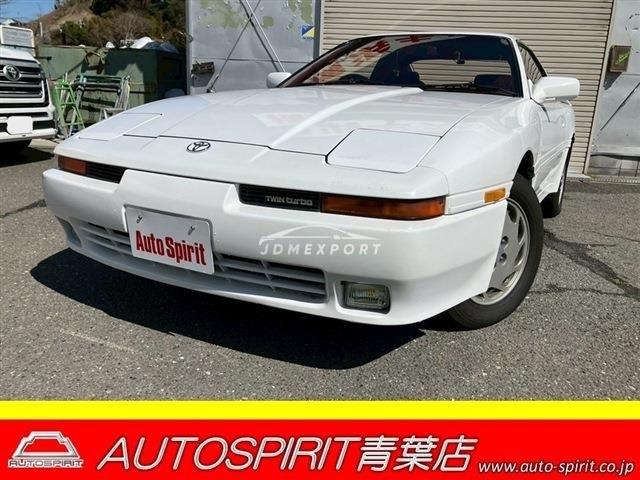
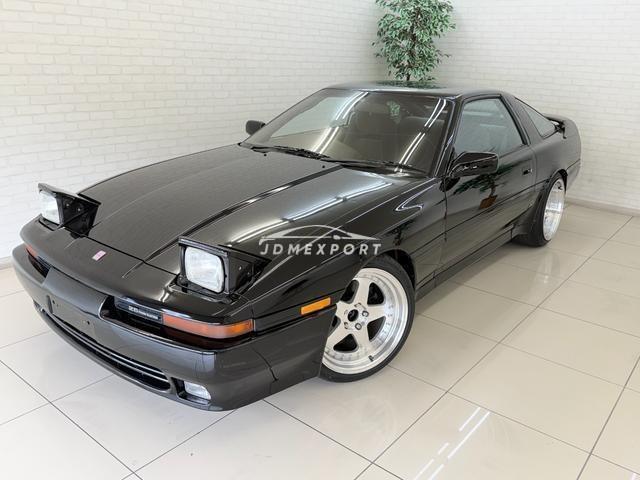
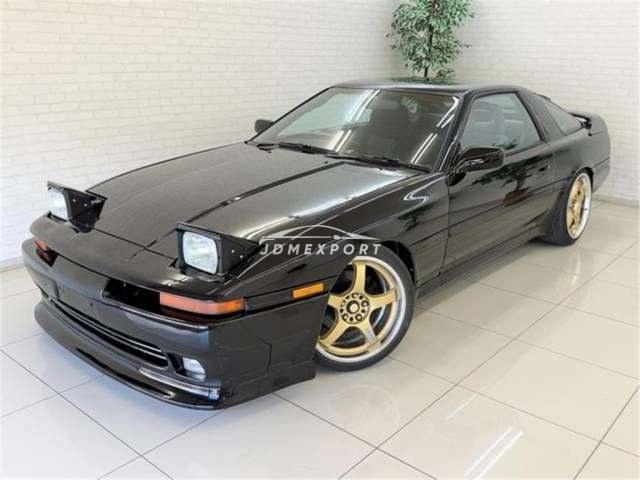
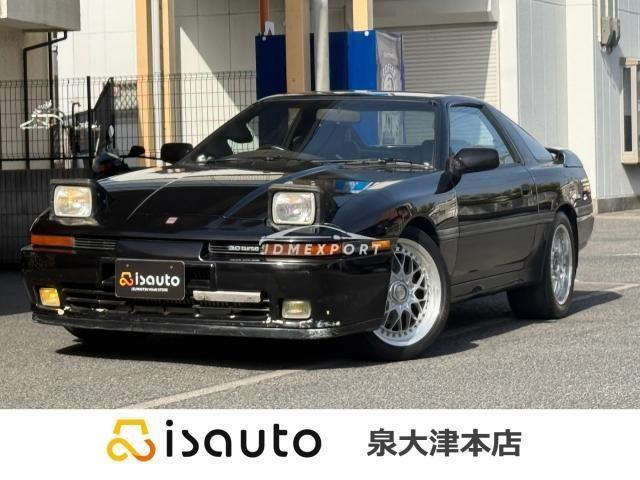
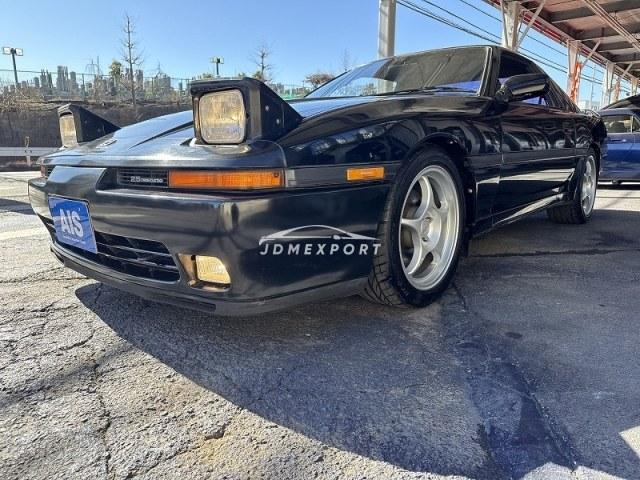
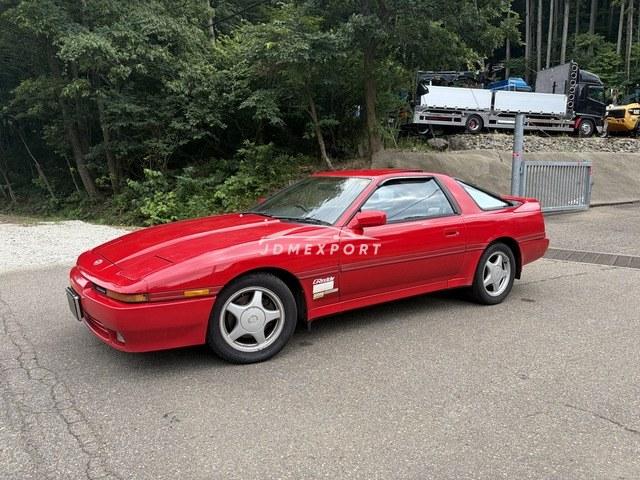
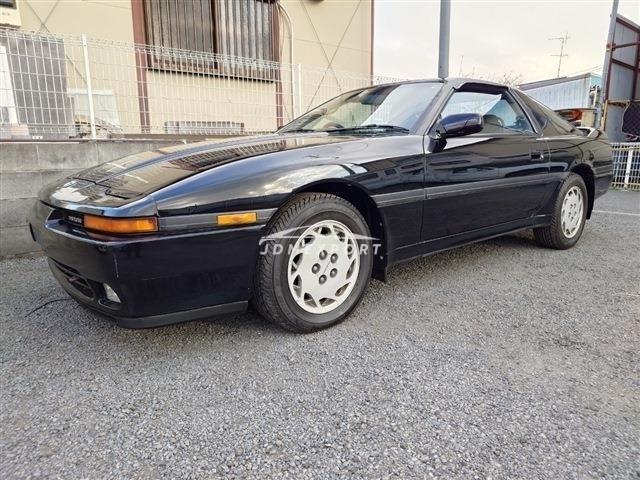
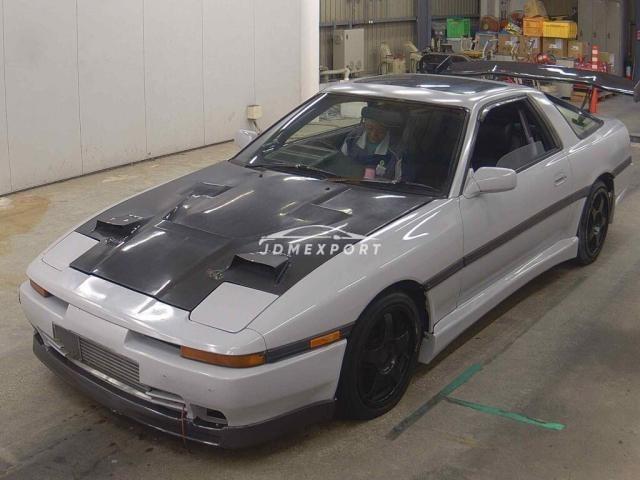
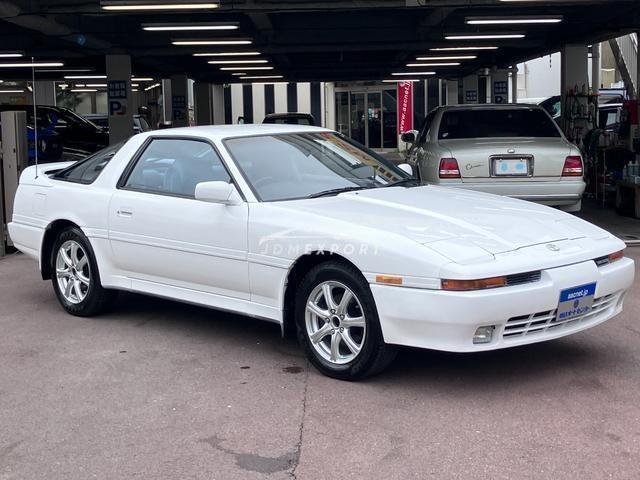
The Toyota Supra A70, also called the MK3, was built from 1986 to 1993 and is the third generation of the Supra. It’s a rear-wheel-drive 3-door liftback with pop-up headlights, and it’s the generation where the Supra dropped the Celica name.
Toyota sold it in the U.S. through the 1992 model year, but Japan got engines and trims that never came here. Japanese-market cars are right-hand drive, and since production ended in 1993, every A70 is now over 25 years old and eligible for U.S. import.
Engines and trims
The two engines shared with U.S. cars are the 3.0L 7M-GE, a naturally aspirated inline-six rated at about 190 PS, and the turbocharged 7M-GTE at about 230 PS. Japan also had two engines the U.S. never got. The GA70 used a 2.0L twin-turbo 1G-GTEU rated at about 210 PS, and its narrower body kept it in a lower Japanese tax bracket.
From 1990, the JZA70 2.5 GT Twin Turbo R used the 1JZ-GTE, a 2.5L twin-turbo inline-six rated at about 280 PS. The 1JZ-GTE is the most sought-after JDM A70 because it makes the most power, and it’s the same engine family used in the later JZX90 Chaser, Mark II and Cresta. Transmissions are a 5-speed manual or a 4-speed automatic, and most buyers look for the manual.
How it drives
The A70 weighs roughly 1,400 to 1,550 kg (3,100 to 3,400 lb) and has four-wheel independent suspension. It’s more of a grand tourer than a lightweight sports car, and the turbo versions are quick for the era but not in the same league as the A80. The angular, 1980s styling has aged into a classic look, and clean, unmodified cars are getting harder to find. Some trims came with a targa-style roof.
Importing one
Under the U.S. 25-year rule, a vehicle can be imported without meeting EPA and DOT standards once it is 25 years old, counted from its month of manufacture. Every A70 qualifies. Eligibility doesn’t make it road legal everywhere, though. Each state sets its own registration and emissions rules, and California is the strictest. Japanese chassis numbers aren’t 17-digit VINs, so many DMVs also require a VIN verification.
What to check before buying
Many A70s have been modified or engine-swapped, so confirm the engine code on the auction grade sheet instead of assuming it matches the trim. The 7M engines are known for head gasket problems, so ask whether it’s been done. Look for rust around the rear arches and hatch, leaking roof seals on targa cars, slow or dead pop-up headlight motors, and cracked dashboards. Japanese odometers read in kilometers, so convert before comparing cars. Engine and drivetrain parts are easier to source than interior trim, lights and body panels, so a clean, complete car is worth paying for.
| Spec | Details |
|---|---|
| Production | 1986 – 1993 (Japan) |
| Body | 3-door liftback, rear-wheel drive |
| Trims (Japan) | 2.0 GT, 2.0 GT Twin Turbo, 3.0 GT, 3.0 GT Turbo, 2.5 GT Twin Turbo R |
| Engine |
|
| Power / torque |
|
| Transmission | 5-speed manual or 4-speed automatic |
| Suspension | Four-wheel independent |
| Length | ~4,620 mm (182 in) |
| Width | ~1,675–1,745 mm (66–68.7 in), depending on body |
| Height | ~1,300 mm (51 in) |
| Wheelbase | ~2,610 mm (102.8 in) |
| Curb weight | ~1,400–1,550 kg (3,100–3,400 lb), depending on trim |
| Steering | Right-hand drive |