

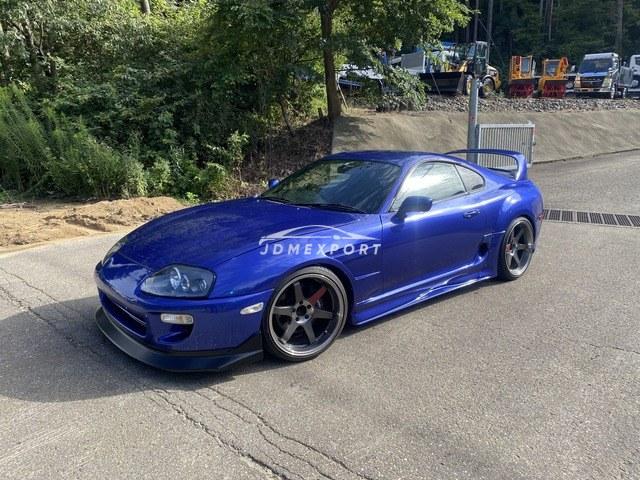
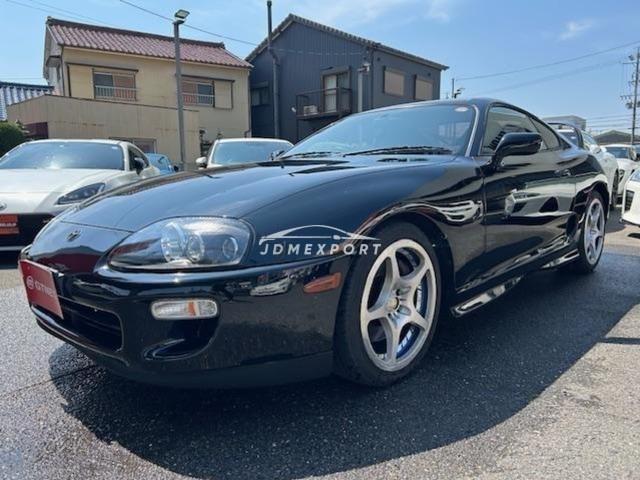
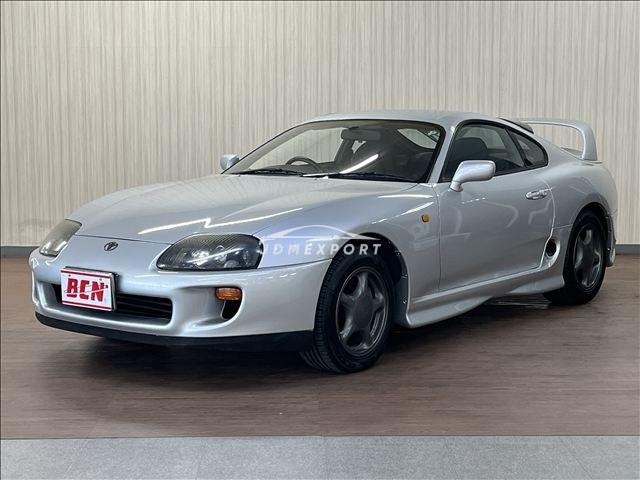
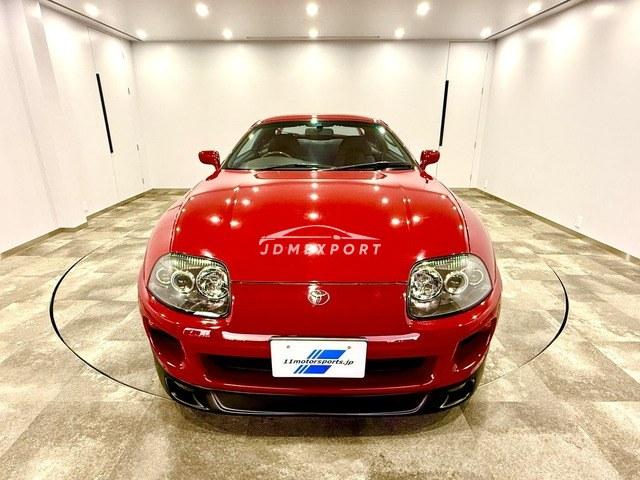
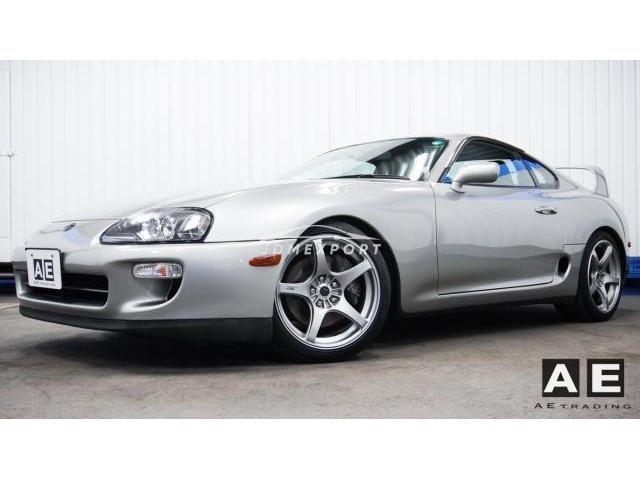
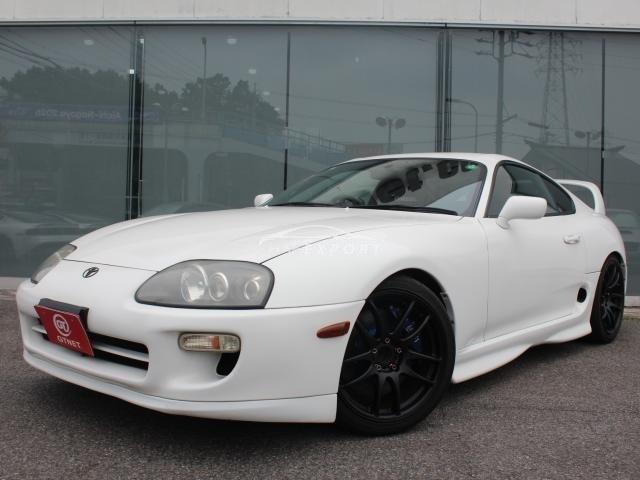
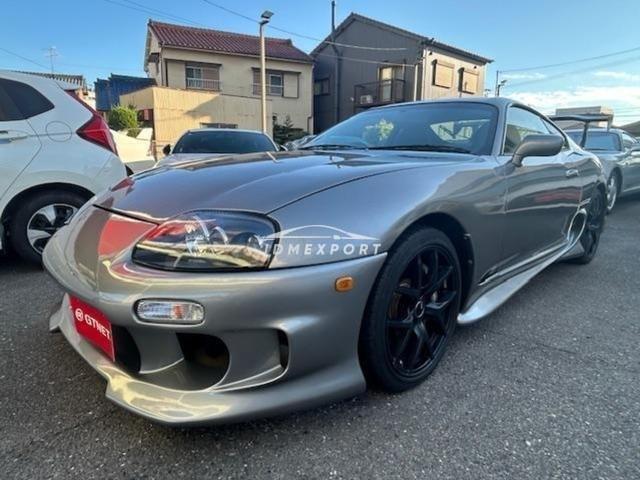
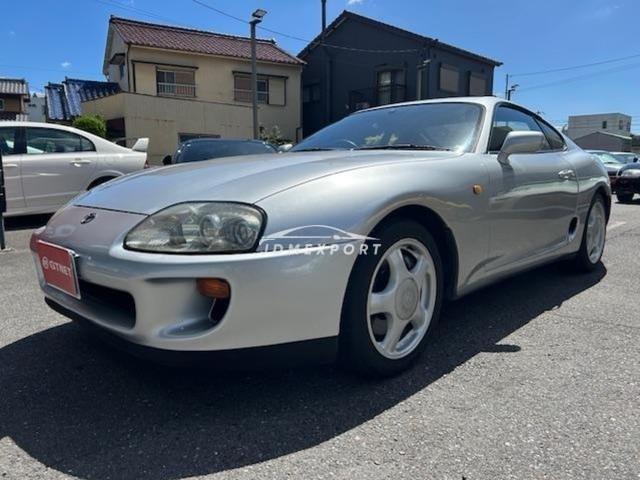
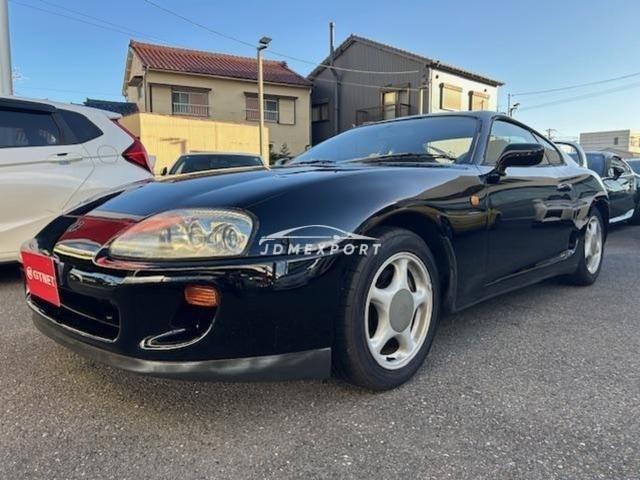
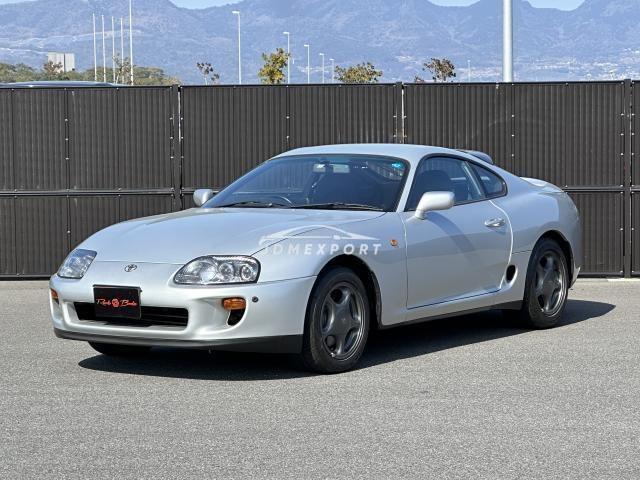

The Toyota Supra MK4 (chassis code JZA80, usually called the A80) is a rear-wheel-drive, front-engine liftback coupe built in Japan from May 1993 to August 2002. The turbo version uses the 2JZ-GTE, a 3.0L sequential twin-turbo inline-six that has become shorthand for “builds big power and survives it.” The U.S. got the Supra MK4 only through 1998, so a JDM car is the only way to get a 1999-2002 model, a Japan-only trim or a late-model VVT-i engine. This guide covers the trims, how the Supra A80 drives, how JDM cars differ from U.S. cars and what to check before you import one.
Toyota Supra MK4 Overview
The A80 replaced the angular Supra A70 with a rounder, wind-tunnel-shaped body, and it was the Supra’s high point: faster than the car it replaced, heavier and more grown-up, and aimed squarely at the Porsche 968 and Nissan 300ZX Twin Turbo. The Supra stayed in production in Japan until August 2002, which is why late cars are easy to find there and hard to find here.
Most Americans know the MK4 from The Fast and the Furious, where the orange Supra turned a Toyota grand tourer into a tuner icon. That reputation has been good for the car’s values and the aftermarket, and it’s the reason turbo manuals now sit in the same price conversation as the Skyline GT-R R34. It also means buyers should expect plenty of modified cars, and fewer clean stock ones than you’d think.
JDM Supra MK4 vs. U.S. Supra: What’s Different
If you’ve seen a U.S.-spec car, the JDM version is the same car with a few real differences that affect what you’re buying:
- Steering side: Japanese cars are right-hand drive, and the speedometer reads in km/h.
- Power rating: The JDM turbo is rated at 280 PS (276 hp), following Japan’s voluntary power cap. U.S. turbo cars were rated at 320 hp. The engines are essentially the same, so don’t read much into the lower figure.
- Speed limiter: JDM cars are limited to about 112 mph (180 km/h). U.S. cars are limited at roughly 155 mph.
- Trims: Japan had the SZ, SZ-R, RZ-S and RZ, with a different spread of equipment and gearbox options than the U.S. Turbo and Turbo Sport Roof models.
- Later cars: Japan got a 1997 update with VVT-i engines and revised styling that never reached the U.S., plus model years through 2002.
Toyota Supra MK4 Trims
| Trim | Engine | Notes |
|---|---|---|
| SZ | 2JZ-GE, naturally aspirated | Entry trim, rated at about 225 PS. 5-speed manual or 4-speed automatic. |
| SZ-R | 2JZ-GE, naturally aspirated | Sportier NA trim with more equipment. Check each listing for gearbox. |
| RZ-S | 2JZ-GTE, twin-turbo | Turbo trim with a 6-speed manual or 4-speed automatic. |
| RZ | 2JZ-GTE, twin-turbo | The performance trim, 6-speed manual only. The one most buyers want. |
Some cars also have the Aerotop, a removable targa roof panel. It’s a nice option, but check the seals, since they age.
If your goal is the Supra MK4 from the movies, you want an RZ or an RZ-S manual. The naturally aspirated SZ and SZ-R are quick enough and cost far less, but they don’t carry the 2JZ-GTE reputation, and many turbo-style bodykits get put on NA cars, so verify the engine code before you pay a turbo price.
How the Toyota Supra MK4 Drives
The A80 is a grand tourer first. It weighs roughly 1,500 to 1,600 kg (3,300 to 3,500 lb), which is heavy for a sports coupe, and you feel it in tight corners. What you get in return is stability. The double-wishbone suspension at both ends keeps it composed at speed, and the long wheelbase makes it calm on the highway, where most small JDM sports cars are nervous. It’s also a comfortable place to spend a long drive, with a low seating position and a driver-focused cockpit.
It’s quick, though. A stock turbo reaches 60 mph in the mid-4-second to low-5-second range, and the boost comes in hard once the second turbo joins. It isn’t a light, razor-sharp car like a Mazda RX-7 FD3S, and it’s not trying to be.
Engine and Performance
The 2JZ-GTE is a 3.0L (2,997cc) inline-six with an iron block, forged internals and a sequential twin-turbo setup. One turbo spools up first for low-rpm response, and the second joins at higher revs to carry the top end. In the JDM car it’s rated at 280 PS (276 hp) and about 431 Nm (318 lb-ft), and real output is usually a bit higher. Cars from 1997 on have VVT-i.
The reason the engine is famous is its strength. The block and internals can take far more than stock boost, so 500 hp on the stock bottom end is common, and more is possible with the right parts. Many MK4s have had their sequential turbos replaced with a single large turbo for that reason. It’s a popular and well-documented swap, but it changes the car’s character, so know what you’re buying.
The naturally aspirated 2JZ-GE makes about 225 PS and is smoother and more relaxed. It’s a good engine, and cheaper to own, but it doesn’t have the same punch.
Toyota Supra MK4 (A80) Specs
| Spec | Details |
|---|---|
| Production | May 1993 – August 2002 (Japan) |
| Body | 3-door liftback coupe, rear-wheel drive |
| Trims | SZ, SZ-R, RZ-S, RZ |
| Engine | Turbo (RZ / RZ-S): 3.0L 2JZ-GTE, sequential twin-turbo inline-6 NA (SZ / SZ-R): 3.0L 2JZ-GE, naturally aspirated inline-6 |
| Power / torque | Turbo: 280 PS (276 hp) / ~431 Nm (318 lb-ft) NA: ~225 PS (222 hp) / ~294 Nm (217 lb-ft) |
| Transmission | Turbo: 6-speed manual or 4-speed automatic (RZ is manual only) NA: 5-speed manual or 4-speed automatic |
| Suspension | Double wishbone, front and rear |
| Brakes | Ventilated discs, all four wheels |
| Length | 4,515 mm (177.8 in) |
| Width | 1,810 mm (71.3 in) |
| Height | 1,275 mm (50.2 in) |
| Wheelbase | 2,550 mm (100.4 in) |
| Curb weight | ~1,500-1,600 kg (3,300-3,500 lb), depending on trim |
| 0-60 mph | ~4.6-5 seconds (turbo) |
| Top speed | ~112 mph (180 km/h), limited |
| Steering | Right-hand drive |
Where the Supra MK4 Fits Among JDM Sports Cars
The A80 competes with some of the biggest names in 1990s Japanese performance. The Skyline GT-R R33 and R32 bring AWD and a more aggressive, race-bred feel, while the Supra offers a smoother, more relaxed rear-drive grand tourer. The Mazda RX-7 FD3S is lighter and sharper, and the Nissan Silvia S15 is a much cheaper rear-drive option for drifting. If a 2JZ-GTE is the draw, nothing else comes close, and for a Supra-specific look at the older generation, see the Supra A70. Browse all JDM sports cars for sale to compare.