

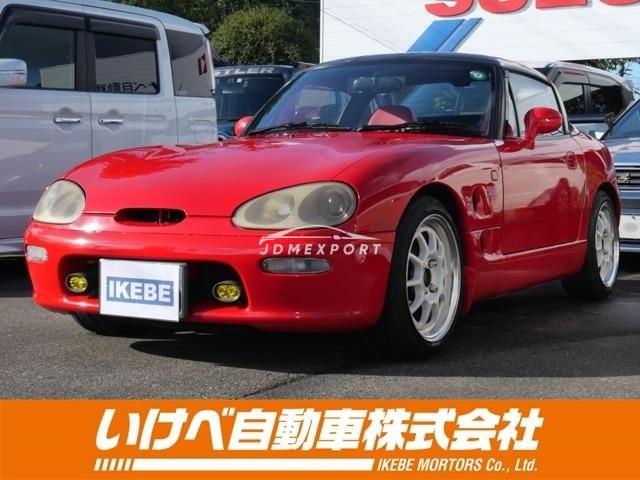
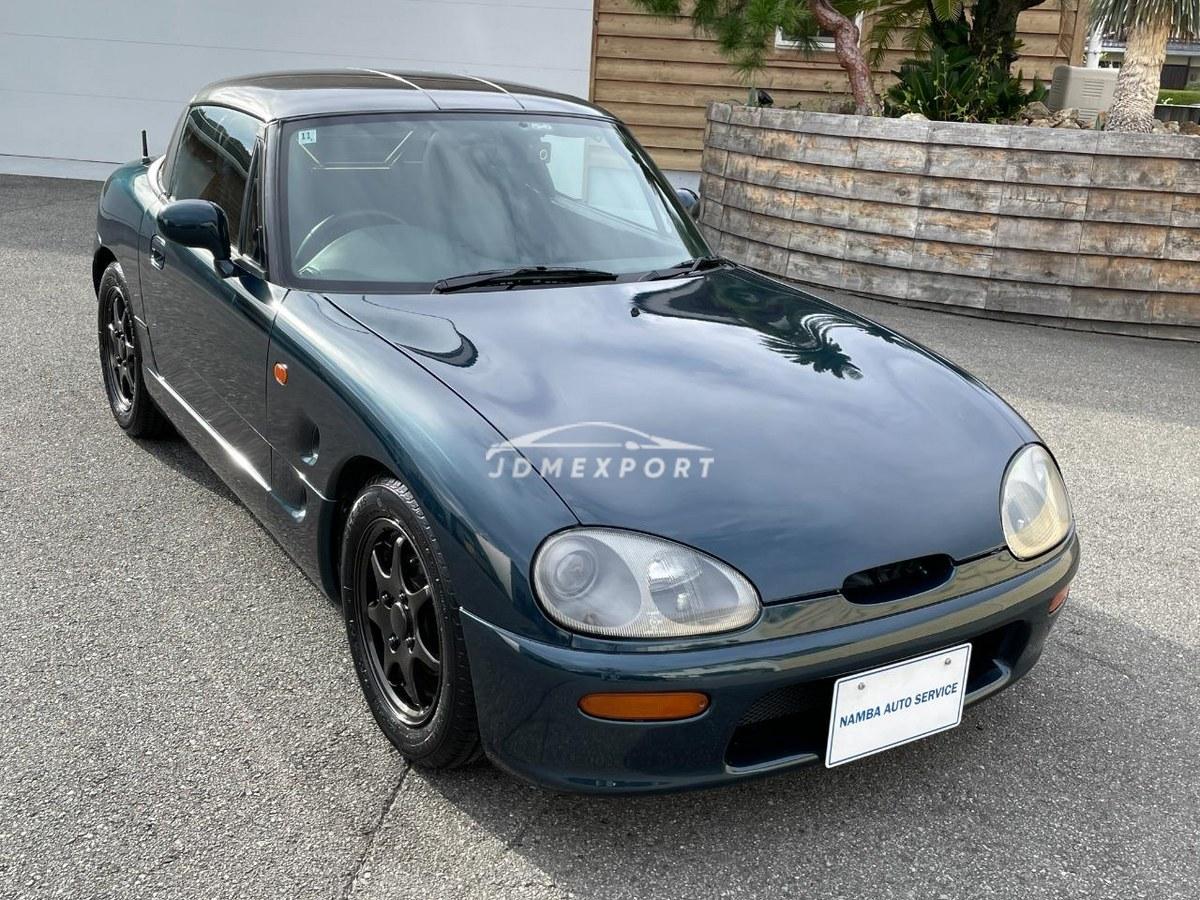
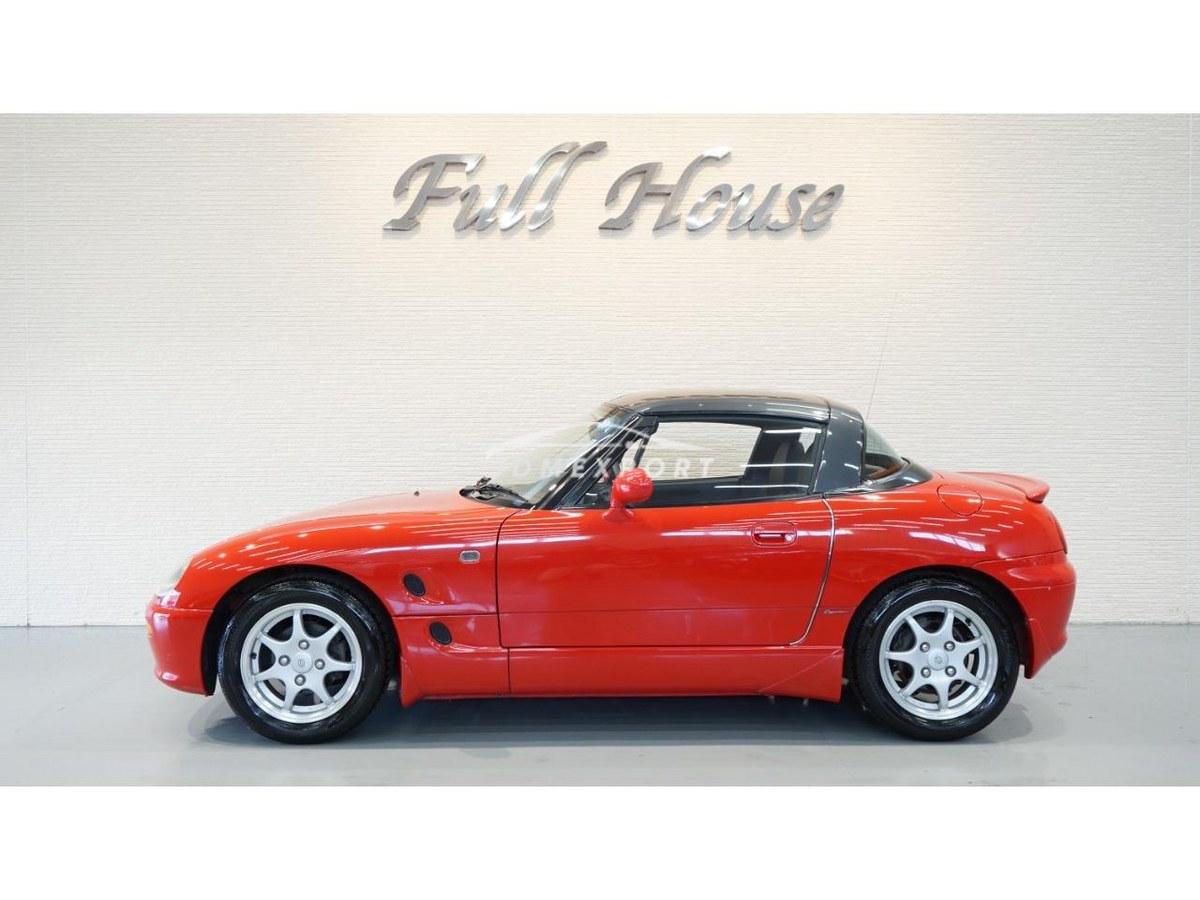
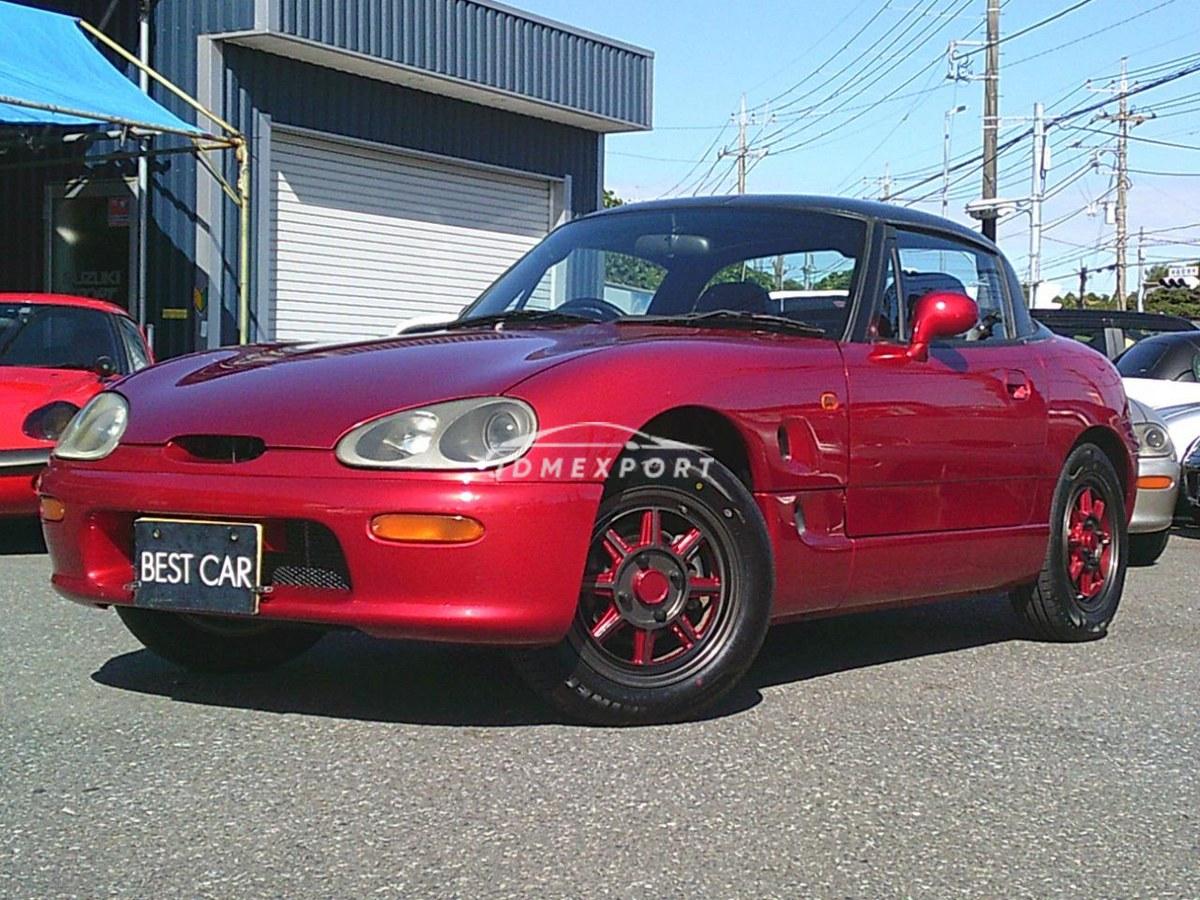
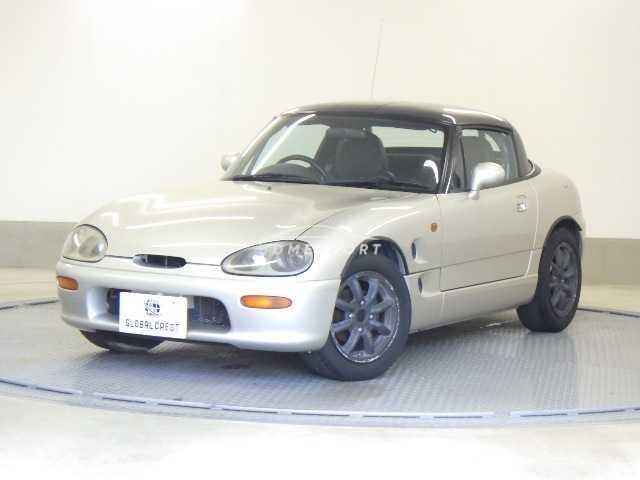
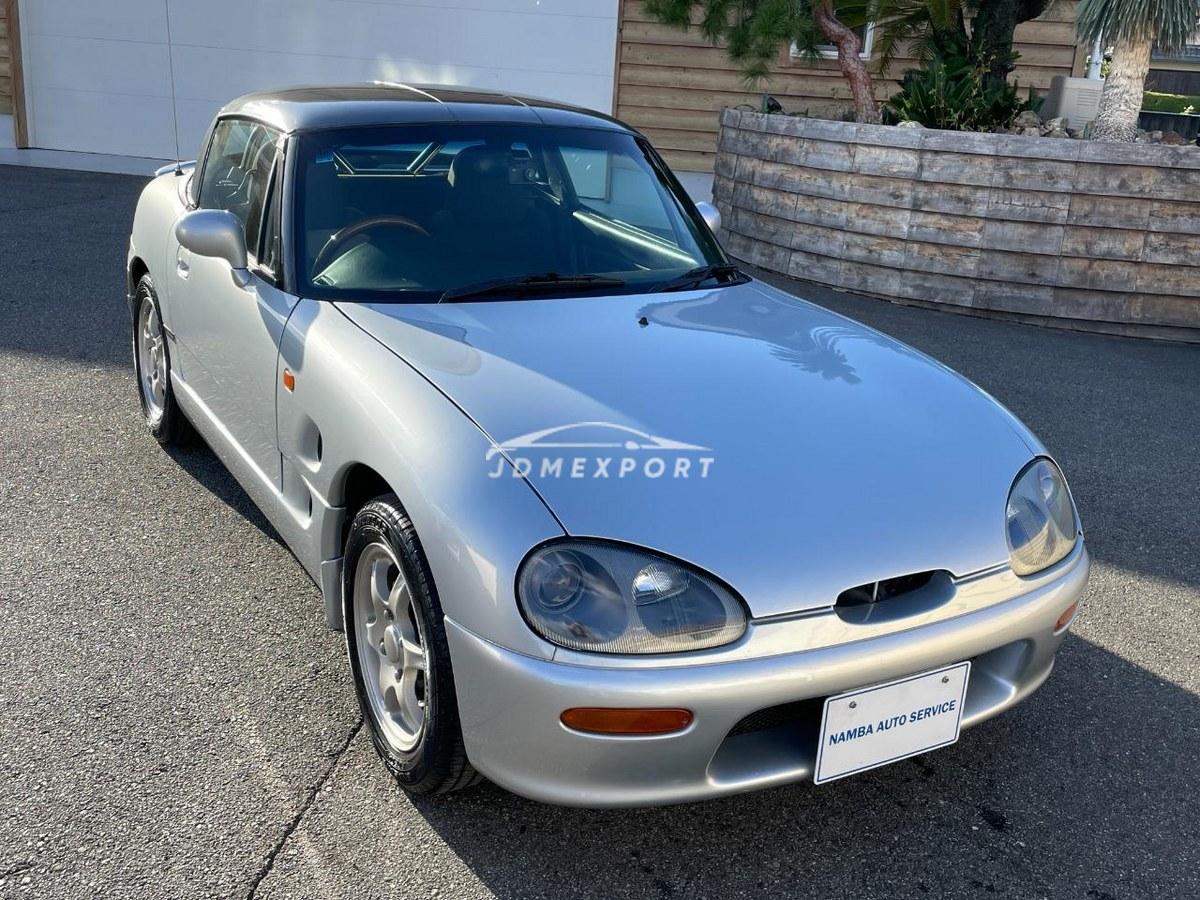
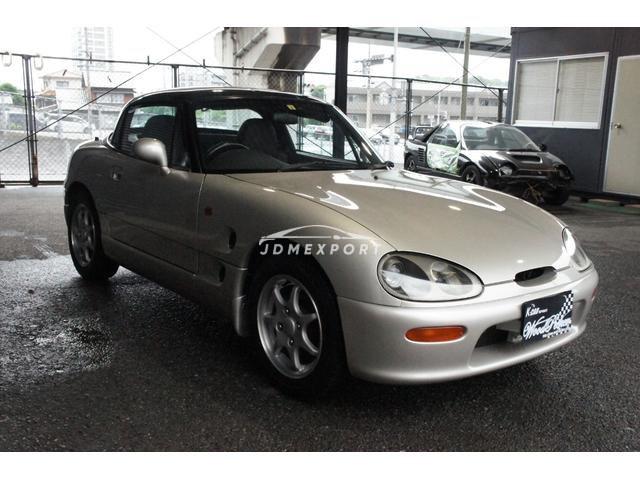
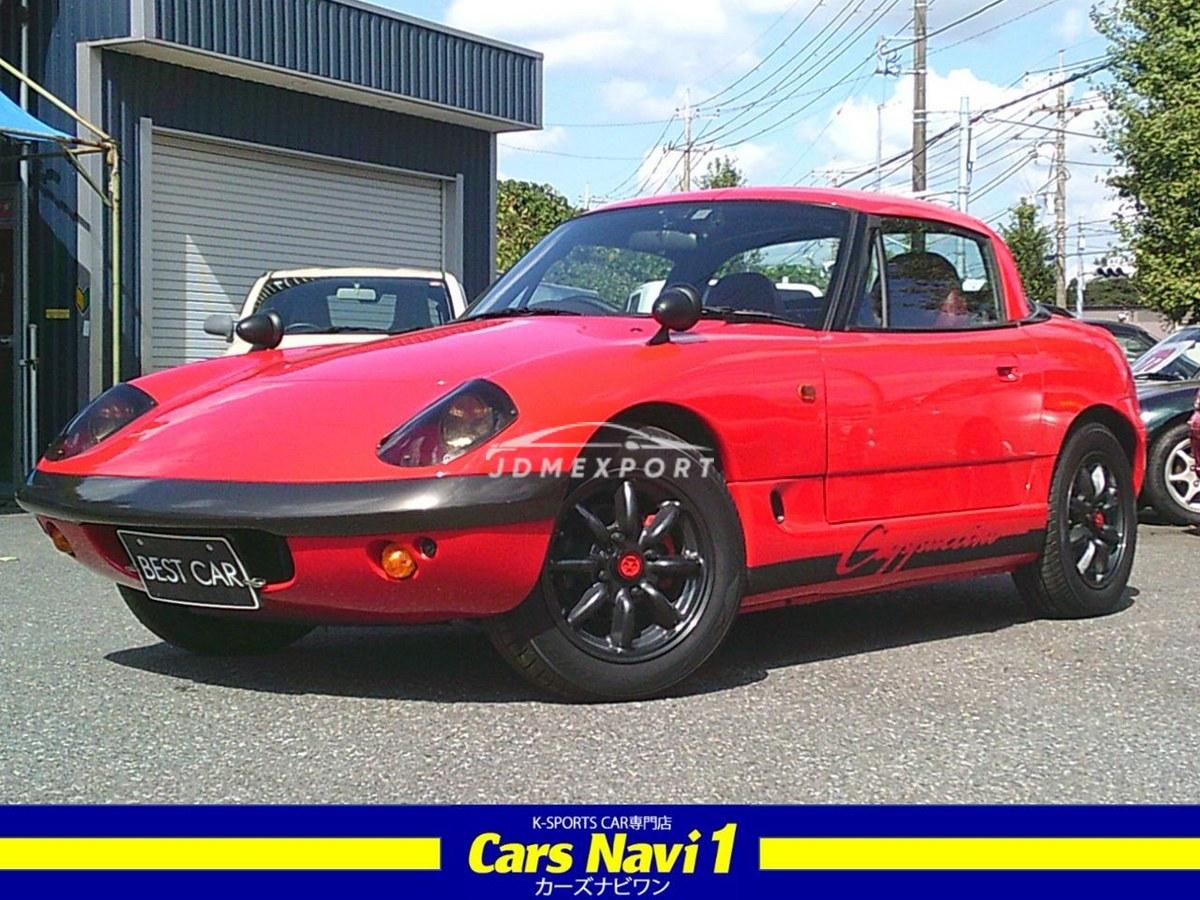
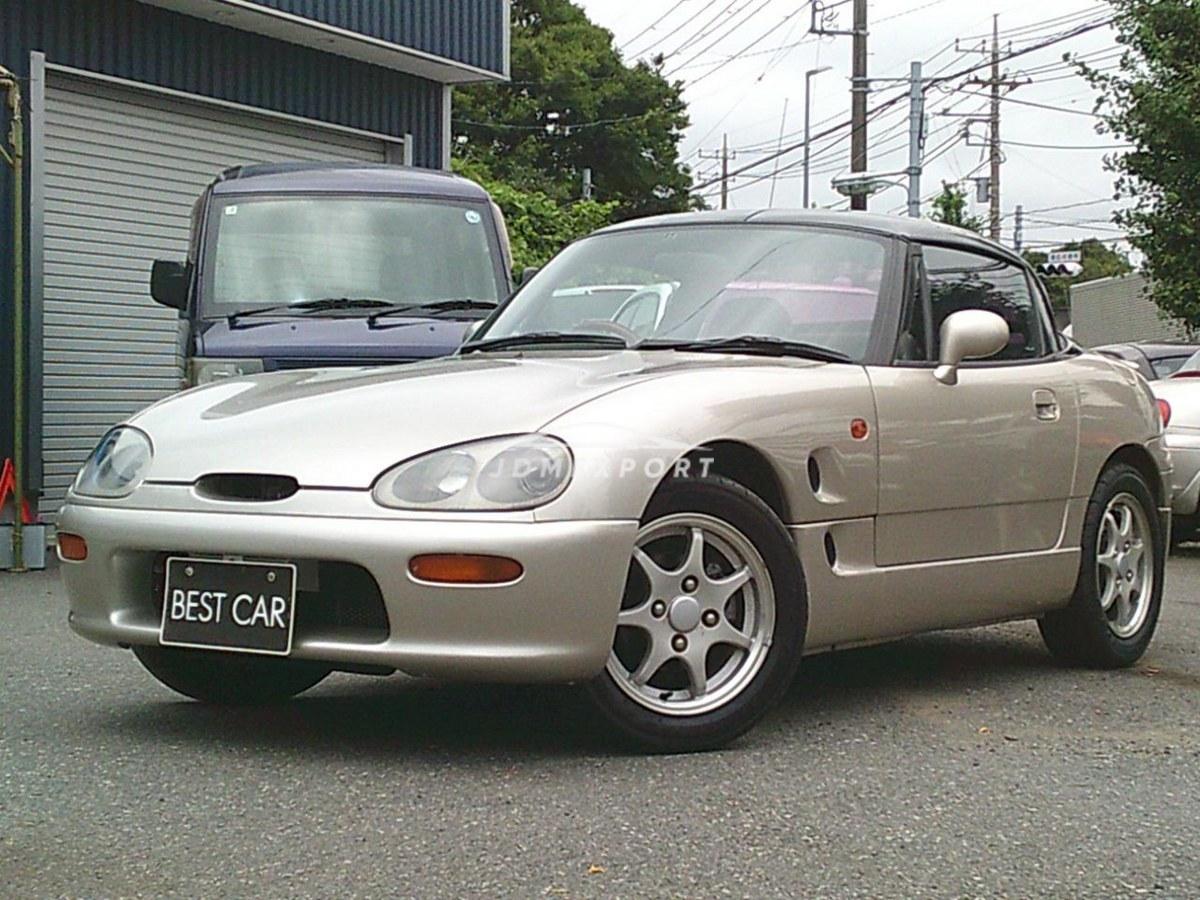
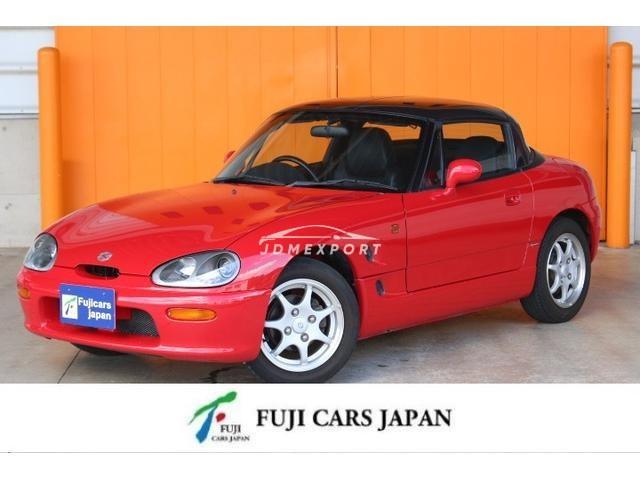
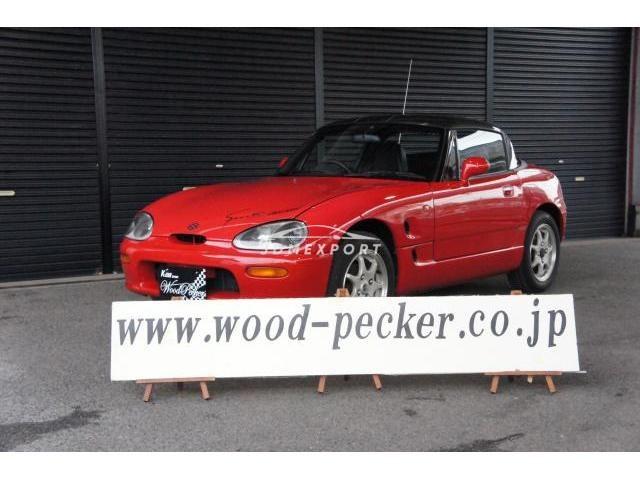
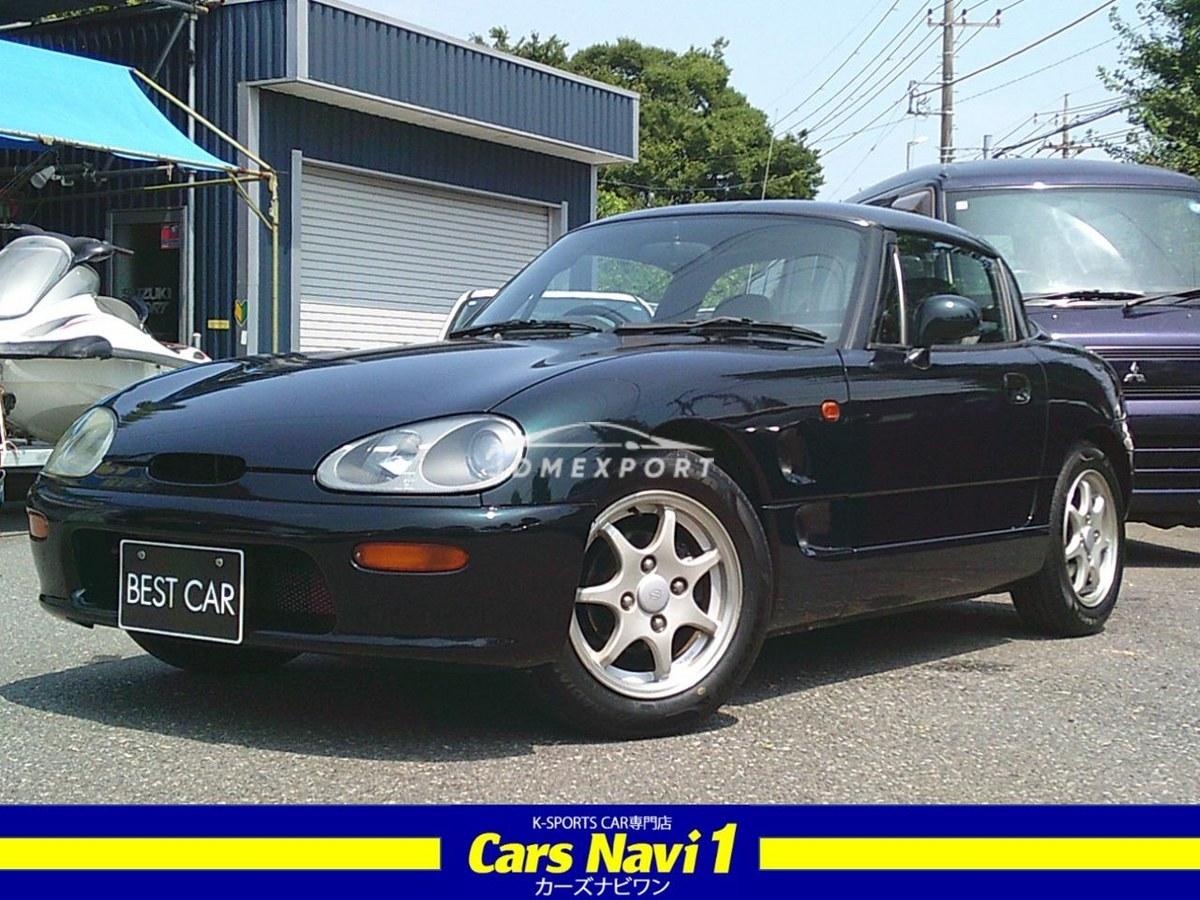
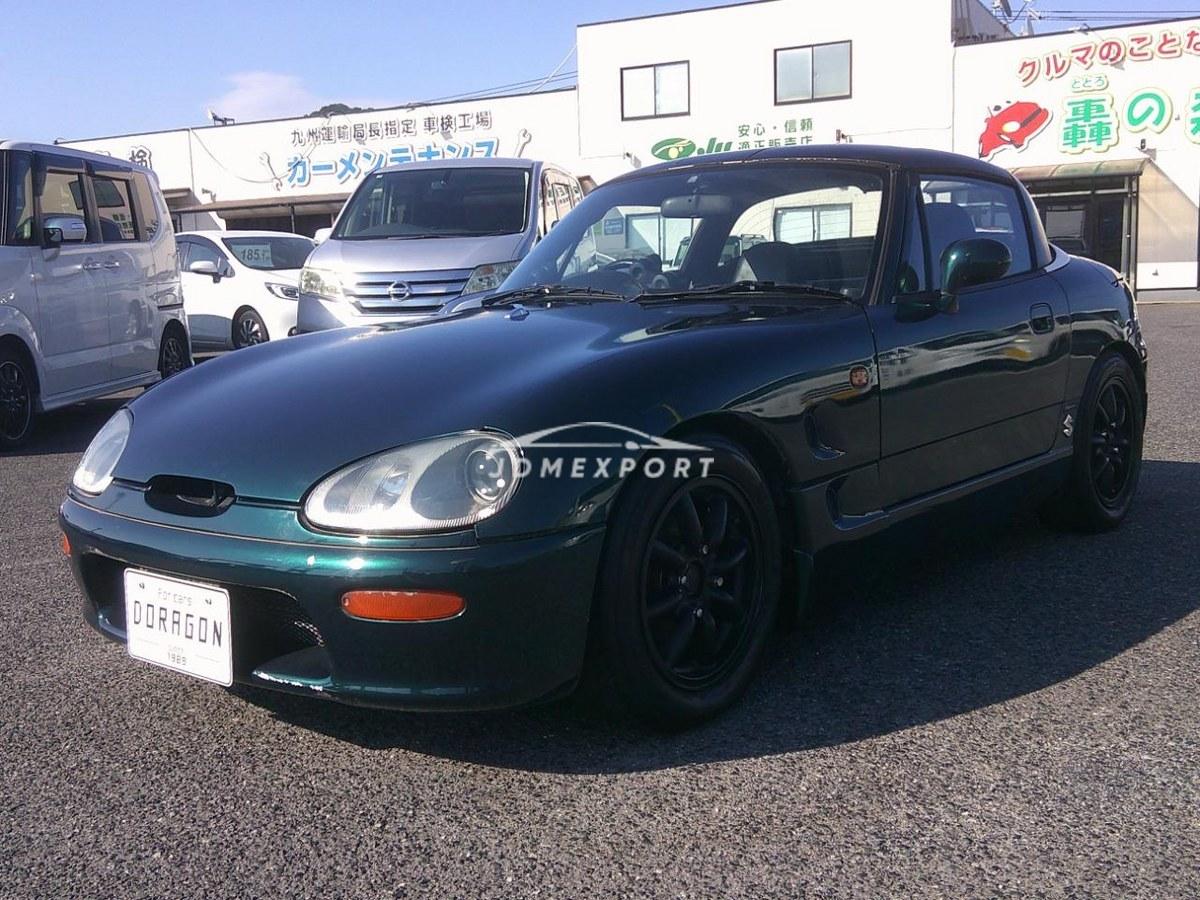
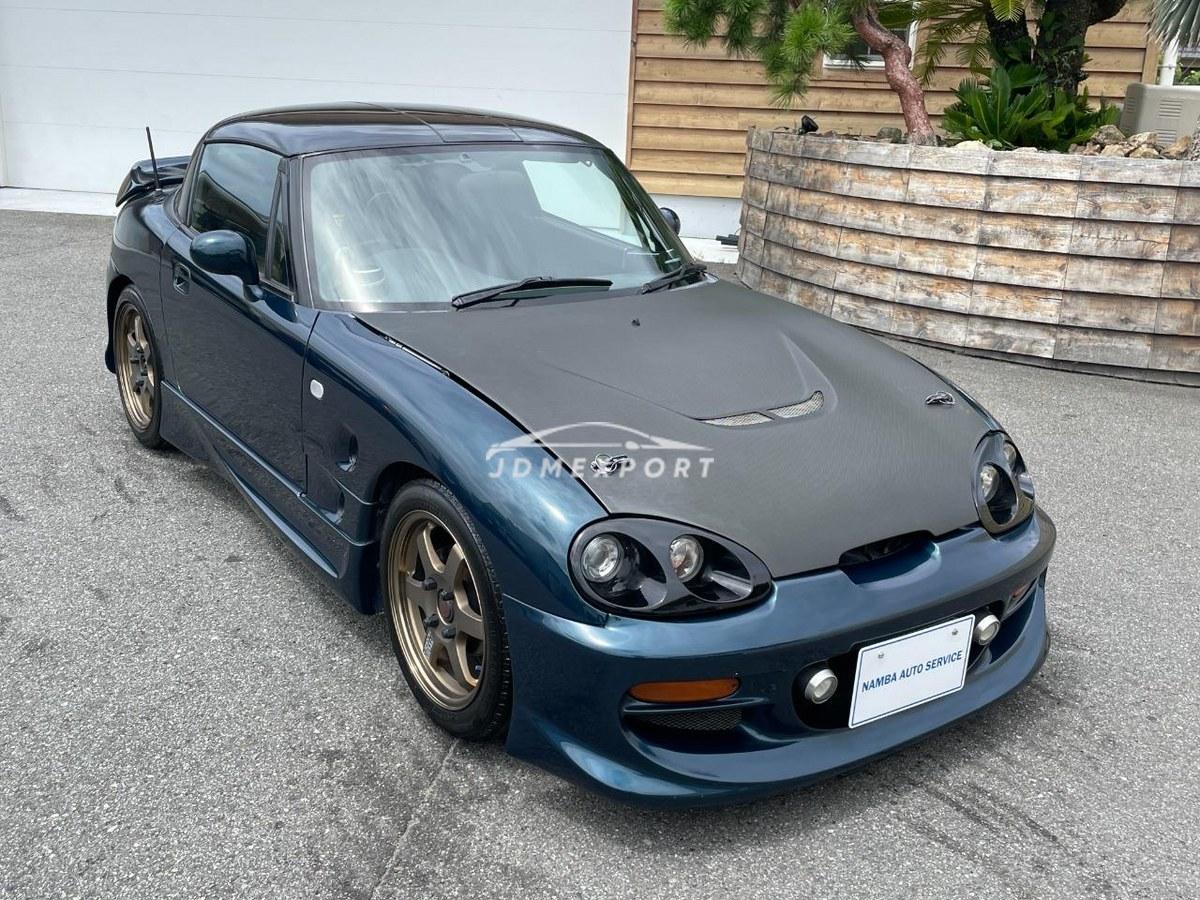
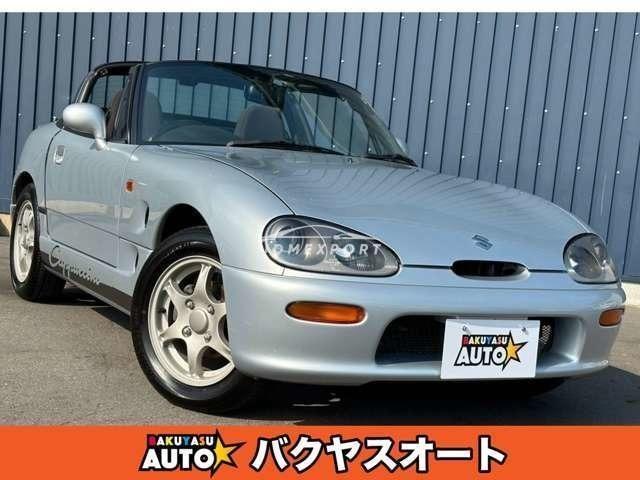
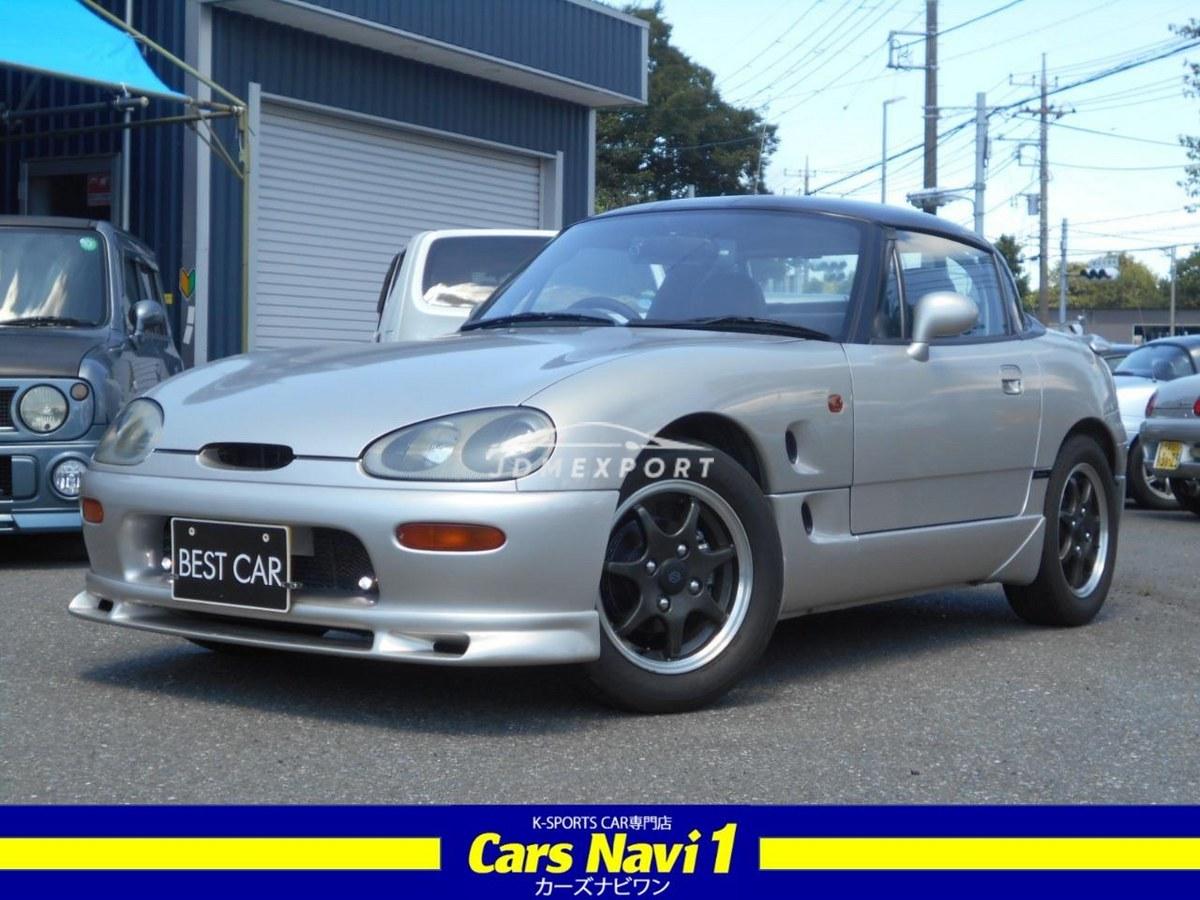
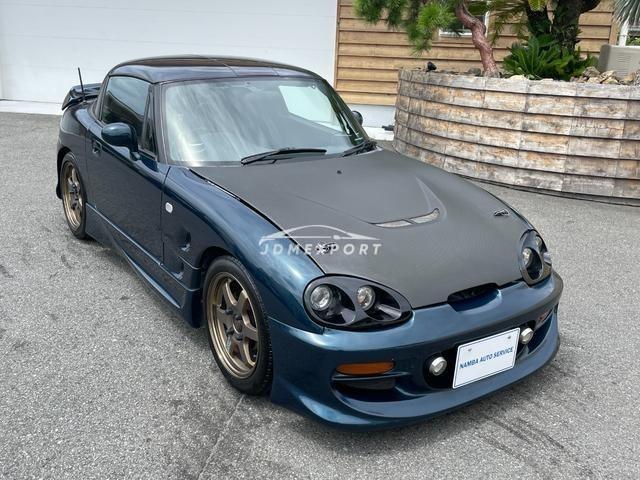
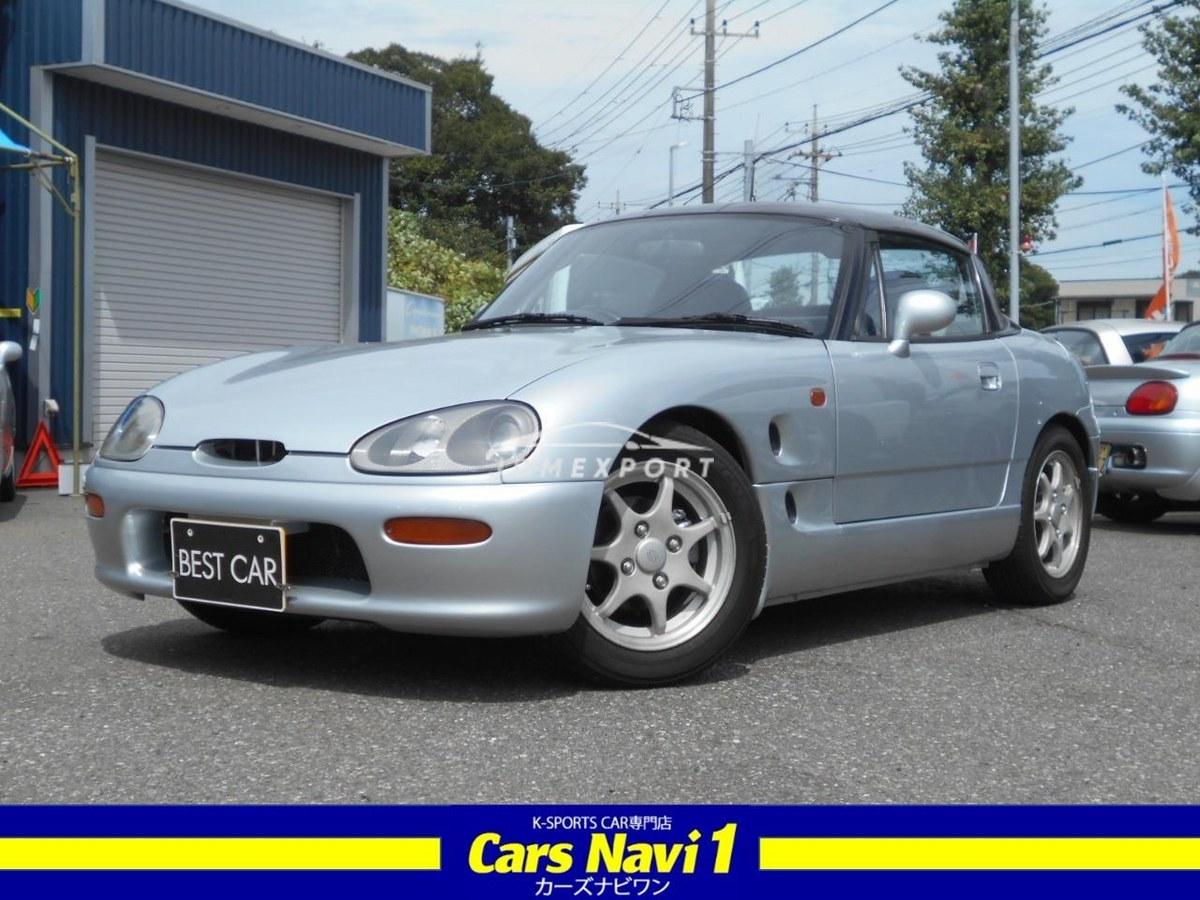
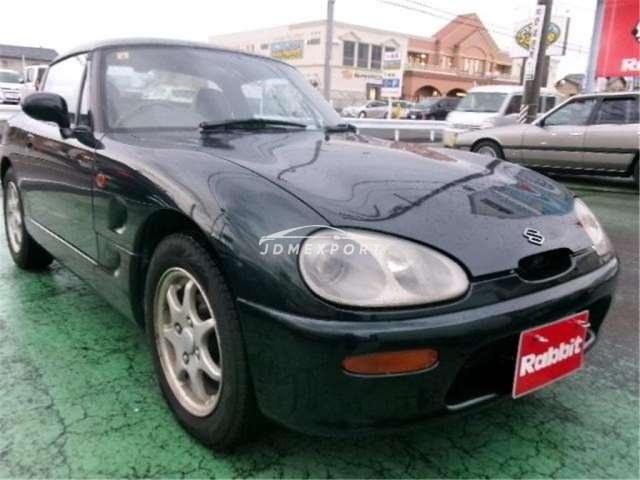
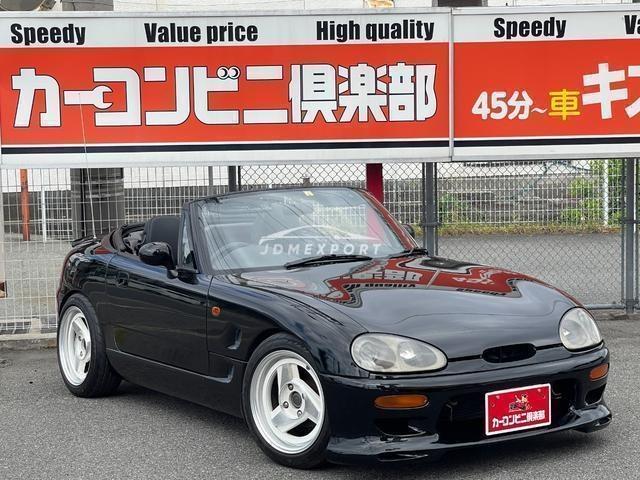
The Suzuki Cappuccino is a two-seat kei-class roadster built in Japan from 1991 to 1997. It has a turbocharged 660cc three-cylinder engine, rear-wheel drive, near 50:50 weight distribution and a roof that converts into a coupe, T-top, targa or full convertible. Suzuki never sold it new in the U.S., so every Cappuccino here is a right-hand-drive import. Because production ended before 1998, every Cappuccino is now over 25 years old and eligible for U.S. import. This guide covers the two generations, how it drives, what to check and how import works.
Suzuki Cappuccino Overview
Suzuki launched the Cappuccino in late 1991 as a kei-class sports car, one of the three small roadsters and coupes from the early ’90s that collectors now call the “Heisei ABC.” The other two are the Mazda Autozam AZ-1 and the Honda Beat. The AZ-1 and Beat are both mid-engine. The Cappuccino is the only one of the three with a front-engine, rear-drive layout, and it’s the only one that works as a hardtop, targa or full convertible.
Like every kei car, it was designed around Japan’s size and engine limits, in this case 660cc and a body under 3.3 m long and 1.4 m wide, with a 64 PS power cap. Suzuki officially sold it in the UK from 1993 to 1995, with roughly 1,100 cars delivered, and these were right-hand drive. The U.S. never got one. In recent years, clean examples have appreciated, and American buyers now import them for weekend driving, autocross and collecting.
Suzuki Cappuccino Generations
| Generation | Chassis | Years | Engine | Notes |
|---|---|---|---|---|
| 1st | EA11R | 1991-1995 | 657cc F6A turbo | 5-speed manual only |
| 2nd | EA21R | 1995-1998 | 657cc K6A turbo | Timing chain, more low-end torque, optional 3-speed automatic, revised wheels |
The 1995 update was the biggest change. The K6A engine is lighter and has a chain-driven timing system instead of a belt, and Suzuki also offered a 3-speed automatic for the first time. Most enthusiasts prefer the manual in either generation. The EA11R is the more common choice for buyers who want the original car, while the EA21R is the one to look at if you want better torque and less engine maintenance.
How the Suzuki Cappuccino Drives
The Cappuccino is closer to a go-kart than a conventional sports car. It weighs only about 700 to 725 kg (1,540 to 1,600 lb), and the engine sits behind the front axle, which gives the car near 50:50 weight distribution. It has four-wheel independent suspension with aluminum double wishbones at every corner and four-wheel disc brakes. The steering is quick and direct, and the car rotates easily at modest speeds.
It’s not fast by modern standards. The turbo kicks in around 3,500 rpm, 0 to 60 mph takes roughly 7 to 8 seconds, and top speed is limited to about 87 mph (140 km/h). It’s the cornering speed and feel that make it fun, particularly on twisty back roads. On the highway, it’s loud, small and affected by crosswinds, and a realistic cruising speed is 60 to 70 mph.
Engine and Performance
Every Cappuccino uses a turbocharged and intercooled 657cc three-cylinder with DOHC and 12 valves, rated at 64 PS (63 hp) at 6,500 rpm, the cap Japanese automakers followed for kei cars. Torque is about 85 Nm (63 lb-ft) on the F6A and rises to about 103 Nm (76 lb-ft) on the later K6A. The F6A family also powers the early JA-series Suzuki Jimny and the AZ-1, though the Cappuccino’s version is the DOHC design with an intercooler.
The engine is small, so it responds well to modifications. A remap, a free-flowing intake and exhaust and a larger intercooler are common first upgrades, and many owners go further. Because the same engine family appears in other Suzuki kei cars, tuning knowledge and engine parts are easy to find.
Roof, Cabin and Daily Use
The roof is the Cappuccino’s most distinctive feature. It has removable panels that can be set up as a closed coupe, a T-top, a targa with the rear section left on or a full open car. The panels store in the trunk, which leaves very little luggage room. A weekend bag is realistic, and a big grocery run isn’t.
The cabin is tight. Drivers over about six feet tall will find the legroom and the seating position cramped, so sit in one before you commit if you can. Most cars have a basic interior, though trim levels varied. ABS, a limited-slip differential and a driver airbag were available on some cars, so check each listing. Crash protection is well below a modern car’s, and all Japanese-market cars are right-hand drive.
Cappuccino vs. Honda Beat vs. Autozam AZ-1
| Suzuki Cappuccino | Honda Beat | Mazda AZ-1 | |
|---|---|---|---|
| Years | 1991-1997 | 1991-1996 | 1992-1995 |
| Layout | Front mid-engine, RWD | Mid-engine, RWD | Mid-engine, RWD |
| Engine | 657cc turbo 3-cyl | 656cc NA 3-cyl | 657cc turbo 3-cyl (Suzuki-built) |
| Power | 64 PS | 64 PS | 64 PS |
| Roof | Removable panels (coupe/T-top/targa/open) | Soft top | Fixed roof, gullwing doors |
| Known for | Balance, roof versatility, torque | 8,500 rpm redline | Rarity, supercar look |
The Cappuccino is the pick if you want a turbo, a hardtop option and a bit more usability. The Beat is the one for high-revving fun and a soft top, and the AZ-1 is the collector’s choice.
Suzuki Cappuccino Specs
| Spec | Details |
|---|---|
| Production | 1991 - 1997 (Japan) |
| Body | 2-door roadster, 2 seats |
| Layout | Front mid-engine, rear-wheel drive |
| Engine | 657cc turbocharged, intercooled DOHC inline-3 (F6A, then K6A from 1995) |
| Power / torque | 64 PS (63 hp) @ 6,500 rpm / ~85 Nm (63 lb-ft) F6A, ~103 Nm (76 lb-ft) K6A |
| Transmission | 5-speed manual, 3-speed automatic (1995 on) |
| Suspension | Double wishbone, front and rear |
| Brakes | Discs, all four wheels |
| Length | 3,295 mm (129.7 in) |
| Width | 1,395 mm (54.9 in) |
| Height | 1,185 mm (46.7 in) |
| Wheelbase | 2,060 mm (81.1 in) |
| Curb weight | ~700-725 kg (1,540-1,600 lb) |
| 0-60 mph | ~7-8 seconds |
| Top speed | ~87 mph (140 km/h), limited |
| Steering | Right-hand drive |
Importing a Suzuki Cappuccino to the U.S.
Federal rule. A vehicle that is 25 years old, counted from its month of manufacture, is exempt from FMVSS safety standards and EPA emissions requirements. Every Cappuccino qualifies.
Customs. Your customs broker files DOT Form HS-7 and EPA Form 3520-1 at the port of entry. Passenger cars have historically paid a 2.5% duty, but additional tariffs on Japanese-built vehicles have applied since 2025, so confirm the current total with your broker. Vehicles from Japan are also subject to USDA inspection, and a dirty underbody can cause delays and cleaning charges.
State registration. Federal clearance only gets the car into the country. Your state decides whether you can title, plate and drive it on public roads. Japanese chassis numbers aren’t 17-digit VINs, so many DMVs require a VIN verification. Some states restrict kei vehicles or right-hand-drive cars, and inspection and emissions rules vary, with California the strictest. Check with your DMV before you buy.
What to Check Before You Buy
Japanese odometers read in kilometers, so convert before comparing cars. Read the auction grade sheet and look closely at the photos, especially the underbody and the roof.
- Rust: Check the sills, floor, wheel arches, front crossmember and the area around the roof mounts. Surface rust is normal at this age. Rust-through is not.
- Roof and seals: Leaking seals, warped panels and missing roof parts are common. Make sure all the panels are present and fit properly.
- Turbo and engine: Look for oil leaks, smoke and signs of turbo wear. On the F6A, ask for timing belt service history. The K6A has a timing chain.
- Cooling and electrical: Check for coolant leaks and ask whether the radiator, hoses and water pump have been replaced.
- Modifications: Many Cappuccinos have been tuned. Ask what was changed and whether it was done properly.
- Interior: Worn seats, cracked dashboards and weathered soft trim are typical at this age.
- Parts: Engine and drivetrain parts are generally easy to find, and the car has a strong enthusiast community, particularly in the UK. Body panels, roof parts and interior trim are harder to find, so a clean, complete car is worth paying for.
Buying a Suzuki Cappuccino Through JDM Export
We quote the car price together with estimated ocean freight, so you know your landed cost upfront. Every listing includes photos and specifications, and we handle Japanese export paperwork and vessel booking. Browse our current Suzuki Cappuccino for sale, the full range of kei cars for sale, or contact us for a shipping estimate.